What Future Students Should Expect About Massage School
You can feel excited about becoming a massage therapist and still wonder whether you can handle school. Maybe you haven’t been in the classroom for years. Perhaps anatomy sounds intimidating, or you are trying to imagine where studying would fit between work and family responsibilities.
Massage therapy school can be challenging because you are learning scientific concepts, developing hands-on skills, and building professional habits at the same time. At NC Massage School in Cornelius, near Charlotte, our 700-hour diploma program brings those areas together through classroom instruction, practical training, and supervised clinical experience.
The important question is not whether you already know how to do everything. It is whether you can make room for the work, practice consistently, and ask for help when you need it. Here is what that commitment looks like.
Anatomy and Performing a Technique Are Different Skills
Recognizing a muscle on a diagram is one kind of learning. Finding that structure through touch, positioning yourself appropriately, and applying an instructor-taught technique require another.
Our curriculum includes anatomy and physiology, kinesiology (the study of movement and pathology), and therapeutic massage and neuromuscular therapy. Students need both the scientific foundation and opportunities to apply it.
For example, imagine learning about a muscle involved in shoulder movement. In the classroom, you might explain where it is and what it does. During supervised practice, the challenge becomes connecting that knowledge to what you can observe and feel. That is why being comfortable with textbooks does not eliminate the need for hands-on practice. Likewise, enjoying practical work does not mean you can skip the science.
In our guide to becoming a massage therapist without a science background, we explain how concepts connect through observation, movement, and practice. The goal is to understand what you are doing, not simply memorize a sequence.
Our published student feedback reflects that balance between challenge and growth. Kelly H., a therapist featured on our testimonials page, describes a “challenging curriculum and fast-paced learning environment.” That is one person’s experience, rather than a promise that everyone will find the same subjects easy or difficult.
Hands-On Learning Includes Communication
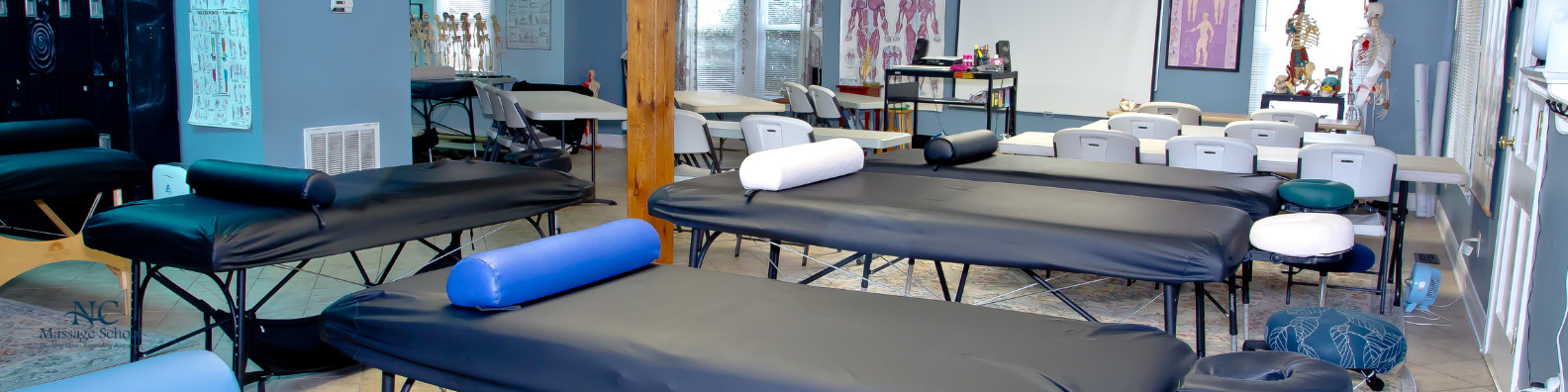
Learning massage also means learning how to work professionally with another person. You need to explain what you are doing, listen carefully, respect boundaries, and respond to feedback. Those responsibilities are part of the work, not extras to consider after you have learned the techniques.
Jules Wyatt, our Program Director and an instructor, addresses these skills in her article for the American Massage Therapy Association’s Massage Therapy Journal. She emphasizes explaining a session beforehand, respecting the client’s choices, and checking in about comfort rather than assuming everything is fine.
A useful practice question:
“Can I explain what I am about to do clearly enough that the other person knows what to expect and feels comfortable asking questions?”
It is a different challenge from recalling a definition, but an important one. You will also receive feedback on your practical work. Our guidance for new students encourages you to treat comments from instructors, classmates, and clinic supervisors as opportunities to refine your skills. Try approaching a correction with, “Can you show me what to change?” rather than treating it as a verdict on your ability.
How Do You Prepare for Written and Hands-On Assessments?
Our catalog includes written exams and quizzes, as well as a final massage practical. It also requires a minimum grade of 70% in each course, together with attendance and clinical requirements. Completing the program involves more than passing one final test.
Full-Time and Part-Time School Both Require Daytime Availability
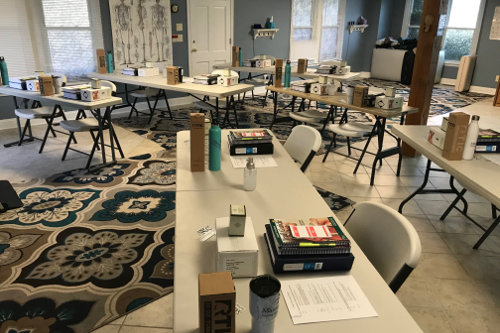
Choosing a schedule is one of the most important decisions you will make before enrolling. Our published schedules are:
Review the diploma curriculum and class schedule and confirm the calendar for your entering class before making work or childcare arrangements.
Part-time does not mean evening, online, or self-paced. The diploma program is taught in person during daytime hours. Both tracks provide the same 700-hour education. Part-time changes the pace, not the expectation that you learn the material. Our program guidance also notes that the longer gaps between part-time class days can make maintaining continuity more challenging. Plan to stay connected to your coursework between meetings.
How Much Studying Should You Expect Outside Class?
Plan for more than the hours printed on the class schedule. Our student guidance recommends outside-class review of techniques, muscle knowledge, and terminology. That preparation needs a place in your calendar alongside commuting, work, family responsibilities, and rest.
Useful questions for admissions:
- What reading, assignments, and practice are expected during a typical week?
- How does that workload change around written exams and practical assessments?
- How are clinical hours scheduled, and which activities must be arranged separately from regular classes?
Our curriculum includes a 100-hour supervised clinical internship. Ask how that component fits into your cohort’s calendar, rather than assuming every week will follow an identical pattern. The best planning question is not simply, “Can I attend class?” It is, “Can I attend class and leave enough room to prepare for the next one?”
What Could a Realistic School Week Look Like?
The following is an illustrative planning example, not an official lesson schedule or a required number of study hours. Your actual coursework, clinic assignments, and instructor directions take priority.
For a part-time student, the same planning approach applies on different class days. The days between classes should not become a complete break from the material. Before enrolling, add your actual class schedule to your calendar. Add your real commute, not an optimistic estimate, and look at what remains.
What Help Is Available When You Struggle?
You do not need to wait until a problem feels overwhelming to raise it.
NC Massage School’s catalog provides for academic advising through the Program Director when a student is experiencing academic difficulty. It also describes instructor tutoring for lecture subjects and hands-on coursework. Tutoring is charged by the hour and paid by the student, so ask about current rates and arrangements beforehand. Make-up work and retesting may also involve fees.
When you ask for help, be as specific as possible:
• Instead of “I am bad at anatomy,” try: “I can recognize this on the diagram, but I am having trouble locating it during practice. Can you help me understand what I am missing?”
• Instead of “I keep doing this wrong,” try: “Which part should I focus on correcting first?”
In a testimonial published in November 2024, Melissa Ramey described meeting the school’s instructors and said, “They really helped me build my confidence.” That is an individual account, but it illustrates why the teaching relationship matters alongside the curriculum. Ask questions early, follow through on the guidance you receive, and speak up when something is still not clear.
Can You Balance Massage School With Work or Family?
Before choosing a program, look at your commitments honestly. For example, a part-time schedule still requires two daytime class days each week, and those days change between semesters. An employer’s support may therefore need to include more than occasional permission to leave early.
Think through transportation, childcare, study space, and what you would do if your usual arrangements fell through. Discuss your school plans with the people whose schedules will be affected.
It is also worth asking yourself whether you can accept being a beginner. You may be highly experienced in your current job and still need repeated demonstrations or extra review in a new field. Give yourself room to learn without expecting immediate confidence. The goal is not to create a schedule that works only when everything goes perfectly. It is to build one that gives you a reasonable chance to keep showing up and making progress.
Ask Admissions About the Workload
You do not have to decide whether massage school is right for you based on a course list alone. Contact NC Massage School to discuss the schedule, preparation expectations, clinical training, and support available.
You can also arrange a campus visit to see the learning environment and ask questions before applying. Call (704) 896-2636 or ask admissions about the workload. Explore our massage therapy program options, review the full diploma curriculum, or read more about starting massage school without a science background.