Massage Therapist or Esthetician?
Both massage therapy and esthetician careers allow professionals to work directly with clients, build long-term relationships, and help people feel healthier and more confident. In the growing Charlotte wellness industry, both professions offer opportunities in spas, wellness centers, and private practices.
However, while these careers may appear similar at first, they focus on very different skills, services, and daily work environments. Understanding those differences early can help you choose the training path that truly aligns with your interests and long-term career goals.
For example, massage therapy training focuses on muscles and soft tissues, helping clients relieve tension, recover from physical strain, and improve mobility. Esthetics focuses on the health and appearance of the skin through treatments like facials, waxing, and cosmetic skincare services.
A Wellness Career That’s Growing Across Charlotte
Charlotte’s rapid population growth has helped create a thriving wellness economy across the region. As more residents prioritize stress relief, recovery, and self-care, demand for trained wellness professionals continues to increase throughout Huntersville, Mooresville, Davidson, Cornelius, and North Charlotte.
While both professions benefit from this growth, their work environments often differ significantly.
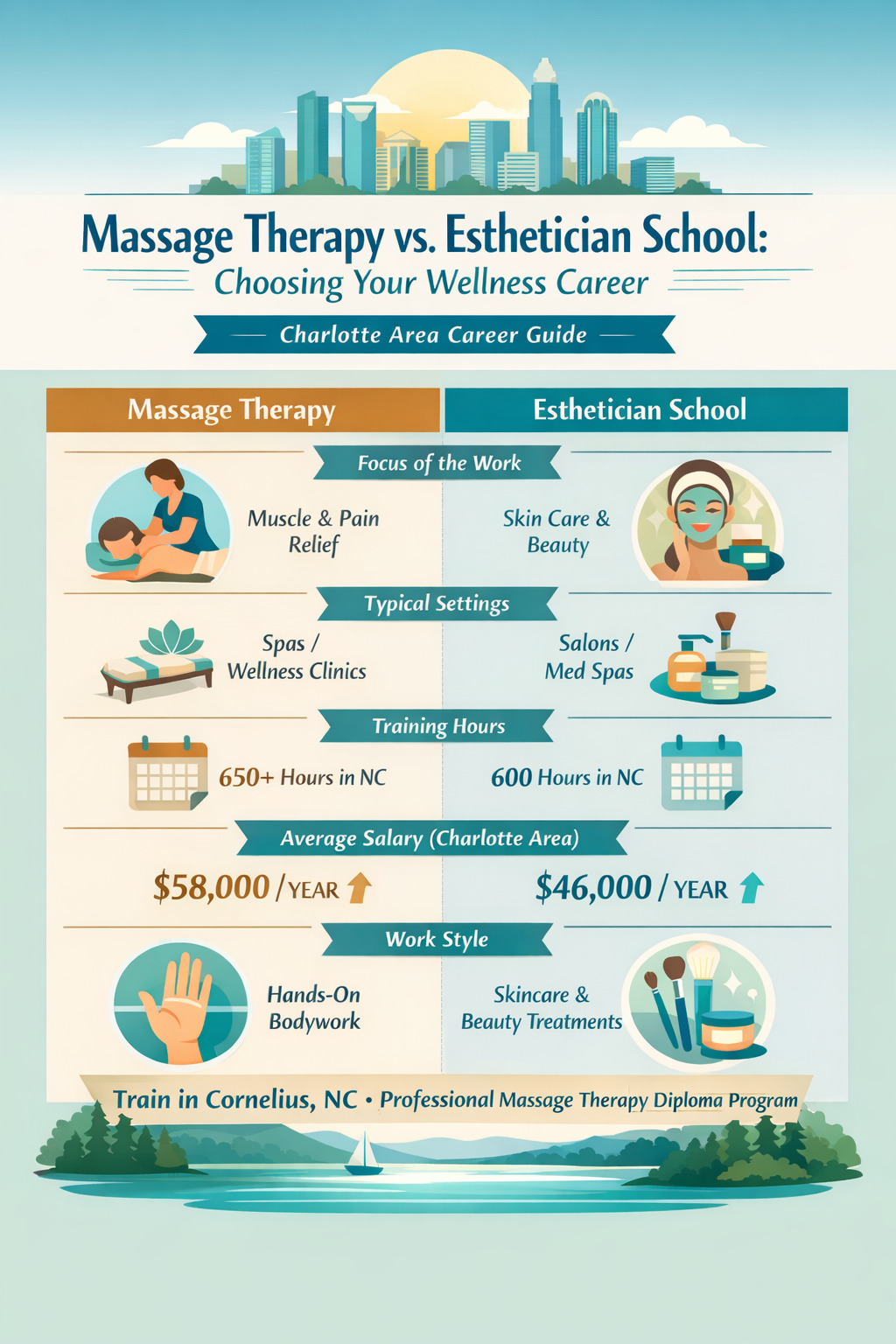
- Massage therapists commonly work in chiropractic offices, wellness clinics, sports recovery facilities, spas, and physical therapy settings.
- Estheticians typically work in salons, day spas, dermatology clinics, and medical aesthetic practices.
- Charlotte’s expanding population continues to increase demand for massage therapy, skincare services, and wellness treatments.
- Career environments differ — massage therapy focuses on muscles and movement, while esthetics focuses on skincare and beauty treatments.
- The local wellness industry continues creating new opportunities for trained professionals in both fields.

What the Daily Work Really Looks Like
Massage therapists typically spend most of their workday providing sessions lasting between 60 and 90 minutes. During these appointments, therapists use hands-on techniques to reduce muscle tension, improve circulation, and help clients feel physically better.
Because massage therapy is physically demanding, therapists often schedule fewer sessions per day than many people expect. Quality bodywork requires proper technique, strength, and focus to maintain long-term career sustainability.
Estheticians, by contrast, often perform shorter treatments throughout the day. Their services may include facials, waxing, lash treatments, or skincare consultations. Their work requires precision, sanitation, and knowledge of skincare products and cosmetic procedures.
Both careers involve standing for long periods and working closely with clients. The key difference is whether your professional focus is the muscles and movement of the body or the health and appearance of the skin.
Training Programs Are Similar in Length
In North Carolina, massage therapy education requires extensive
hands-on massage therapy training combined with coursework in anatomy, physiology, pathology, and professional ethics.
Esthetics programs also combine classroom instruction with supervised practice, focusing on skin analysis, cosmetic procedures, sanitation standards, and skincare treatments.
While training hours may appear similar, the content is very different:
- Massage therapy programs focus on anatomy, muscles, body mechanics, and therapeutic techniques.
- Esthetics programs focus on skin conditions, cosmetic procedures, and skincare treatments.
- Massage therapy appeals to students interested in physical wellness and bodywork.
- Esthetics appeals to students interested in skincare, cosmetics, and beauty treatments.
Local Career Opportunities and Income Potential
Income potential and job demand are important considerations when choosing a wellness career. In the Charlotte–Concord–Gastonia region, massage therapists often earn higher median wages than skincare specialists, particularly when they build a steady client base.
Charlotte’s focus on wellness, recovery, and self-care continues to increase demand for skilled massage therapists across clinics, spas, and fitness facilities.
- Strong local demand: Charlotte’s wellness industry continues expanding.
- Income potential: Therapists with loyal clients and consistent schedules can earn competitive wages.
- Active hands-on work: Massage therapy involves body mechanics and physical movement.
- Precision skincare work: Estheticians focus on treatments requiring attention to detail.
- Career growth: Both professions reward professionals who build strong client relationships.
Start Your Massage Therapy Career Near Charlotte
NC Massage School in Cornelius offers a 700-hour professional diploma program designed to prepare students with real-world skills through hands-on training and clinical experience. Flexible full-time and part-time options make it possible to complete your education on a schedule that works for you.
Learn more about massage therapy training opportunities in the Charlotte and Lake Norman region.