Prepping for Massage School
Are you considering becoming a professional massage therapist? A swarm of questions must be floating in your mind: Which institution is right for me? How extensive is the curriculum? What certifications can I acquire? Is massage school the right fit for my career goals?
Choosing a massage school involves considering course variety, certification types, and financial implications, and ensuring the institution’s environment aligns with your values and career aspirations.
Key Considerations Before You Enroll
Review these insightful pointers as you prepare for your forthcoming venture into the world of therapeutic massage.
1. Variety in Courses
Every massage course has its distinct flavor, but all focus on instilling the skills to master the art of massage therapy. Dive into the core subjects of anatomy, massage fundamentals, health protocols, and mastering client interactions.
2. Duration of Massage School
How long will you be in school? Each state has unique licensing norms impacting the duration of certification courses. In North Carolina, state standards require at least 700 hours of approved training, while our comprehensive 700-hour curriculum spans roughly six months for full-time students or twelve months part-time during weekday daytime schedules.
3. Certification Types
The Federation of State Massage Therapy Boards (FSMTB) and national certifying bodies set key standards. Beyond foundational licensing, a world of specialization awaits, from medical massage and clinical neuromuscular therapy to reflexology and sports recovery.
4. Pre-Entry Requirements
Each state and school maintains specific prerequisites. A high school diploma or equivalent (such as a GED) and being at least 18 years old are standard requirements. It’s always prudent to check directly with your desired institution for specific admissions guidelines.
5. A Flourishing Domain
Data from the American Massage Therapy Association (AMTA) revealed that the massage therapy sector was valued at $18 billion in 2018 and continues to experience steady long-term growth. Opportunity is knocking across clinics, spas, and private practices; are you ready?
6. Financial Blueprinting
Qualifying as a massage therapist carries a financial commitment. Typical private courses range from $8,000 to $12,000. Location and state regulations play their part in determining tuition, and remember to account for textbooks, linens, and essential bodywork supplies.
7. Finding the Perfect Institution
Your ideal school extends beyond the written curriculum. The campus environment, instructor expertise, and teaching philosophy matter. Attend an open house or tour, connect with alumni, and ensure you resonate with the institution’s culture.
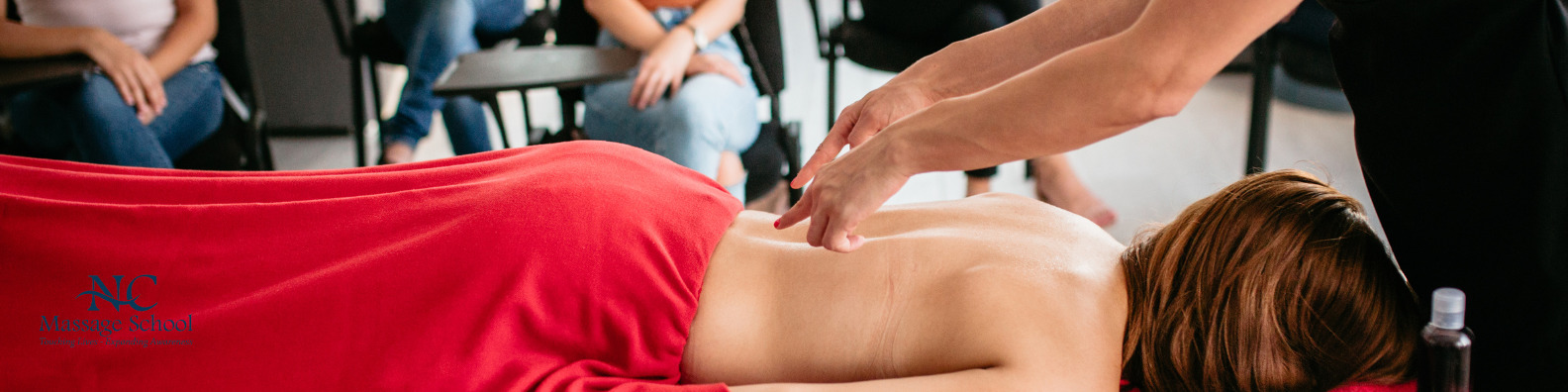
What Is The Learning Environment Like?
NC Massage School offers a unique learning environment at our charming campus in Cornelius, NC, located just minutes from Charlotte and Lake Norman.
If learning the therapeutic art of touch intrigues you, here is a sneak peek into what massage school has in store:
Broad Spectrum of Topics
- Understanding the Body: Deep dive into anatomy, physiology, and kinesiology to unravel how muscles, bones, and organ systems function.
- Beyond Physicality: Master professional ethics, communication, and business management to build lasting, trusting client relationships.
- Classroom Tools: Engage with interactive lectures, anatomical charts, and skeletal models for well-rounded theoretical learning.
Practical Learning Experience
Practical training is the heart of massage education. In a supportive hands-on environment, students alternate giving and receiving massages, developing technical confidence while experiencing the therapeutic benefits of bodywork firsthand.
Professionalism and Etiquette
- Hygiene and Respect: Maintain high standards of sanitation for your hands, equipment, and treatment space while honoring client privacy and draping protocols.
- Active Listening: Cultivate an empathetic bedside manner that puts clients at ease and fosters therapeutic trust.
Building Lasting Bonds
One of the most heartwarming aspects of massage school is the close camaraderie formed with your classmates. This tight-knit community of peer encouragement, shared learning, and mutual growth creates connections that last throughout your career.

Core Modalities and Curriculum Focus
Swedish Massage
Foundational techniques designed to relax muscles, increase circulation, and soothe stress.
Clinical Neuromuscular Therapy
Targeted trigger-point work and structural alignment to relieve chronic pain and muscle spasms.
Clinical Sports Massage
Tailored for athletes and active individuals to enhance performance and aid injury recovery.
Connective Tissue & Reflexology
Fascial release work alongside specialized pressure point modalities on hands, feet, and ears.
Foundational Science & Health Knowledge
Beyond hands-on techniques, mastering human biology is essential. Students complete rigorous coursework in Musculoskeletal Anatomy, Applied Physiology, Kinesiology, Pathology, CPR, and First Aid safety protocols.
The Business and Legal Landscape
Navigating state laws, MBLEx board requirements, and professional ethics is an integral part of your education, empowering you to establish a legal, successful practice or excel in clinical settings.

Career Opportunities & Beyond
Post-graduation, your professional growth continues. Continuing Education (CE) opens new doors to advanced modalities, helping you maintain state licensure requirements while expanding your clinical skill set.
The Bureau of Labor Statistics projects strong ongoing demand for skilled massage therapists. This versatile career path opens doors to diverse work environments, from medical clinics and athletic recovery centers to luxury spas and thriving private practices.
Start Your Journey Today
Kickstart your rewarding career by choosing a program that mirrors your values, supports your learning, and prepares you for lasting professional success.
Experience the transformative power of touch and make a real difference in healthcare and wellness.